
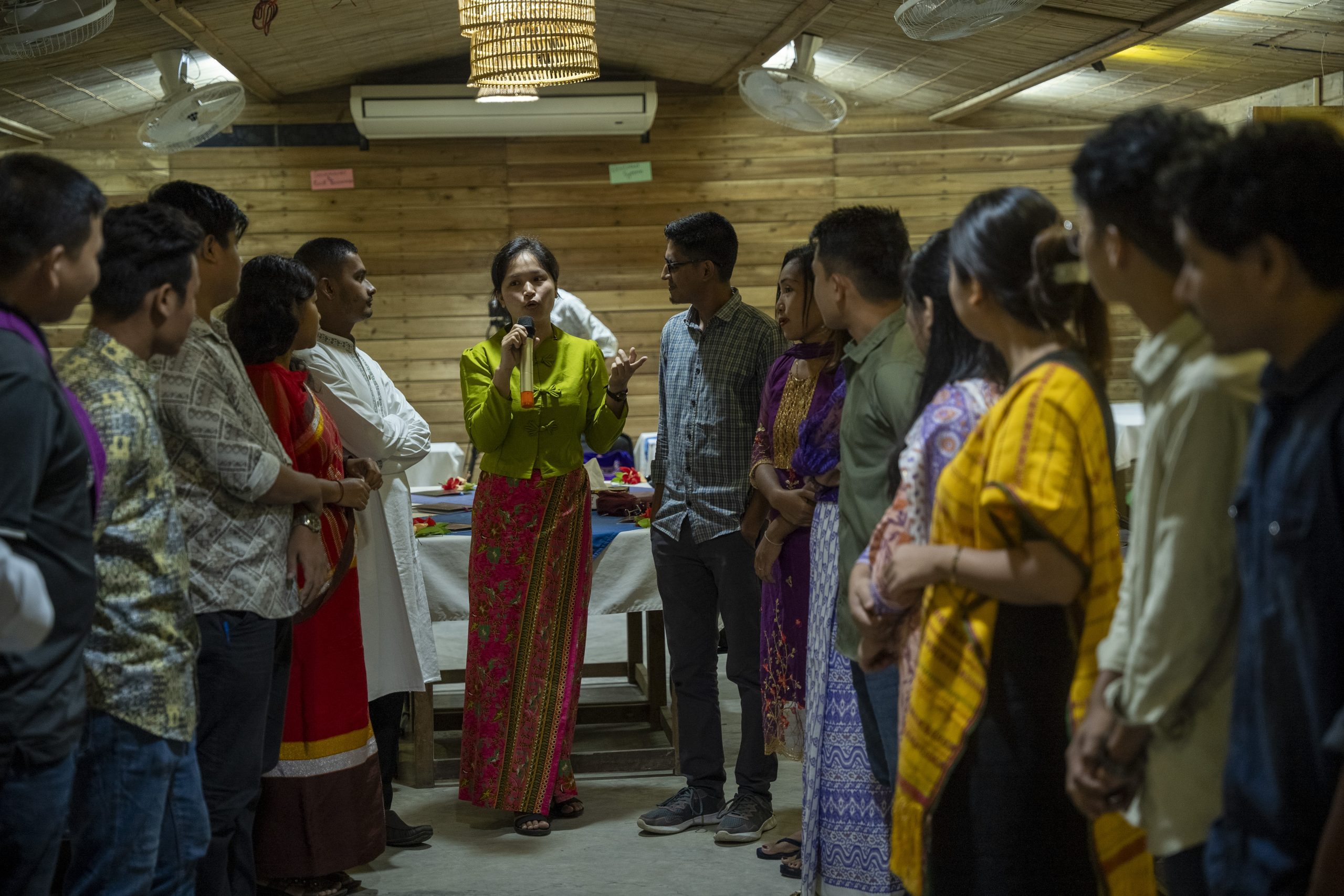
The “Informed Opinions for Better Decisions: Empowering Youth Voices” project, funded by European Union, led by DW Akademie and implemented by Bonhishikha, Kotha, and Article 19, aimed to promote youth participation in democratic processes. Targeting rural young adults from Rangpur, Chittagong Hill Tracts, Mymensingh, and Satkhira, the programme facilitated discussions with local youth groups on gender issues, citizenship, and rights, highlighting the importance of political awareness and participation. Bonhishikha engaged with youth-led groups across the country to co-create interactive session designs that can encourage reflective discourse and open communication within participants in the community. It allowed a space for young participants from diverse identities and experiences to delve into conversations about political rights, freedom of expression, and citizenship rights.
Theme: Equitable access to rights
-
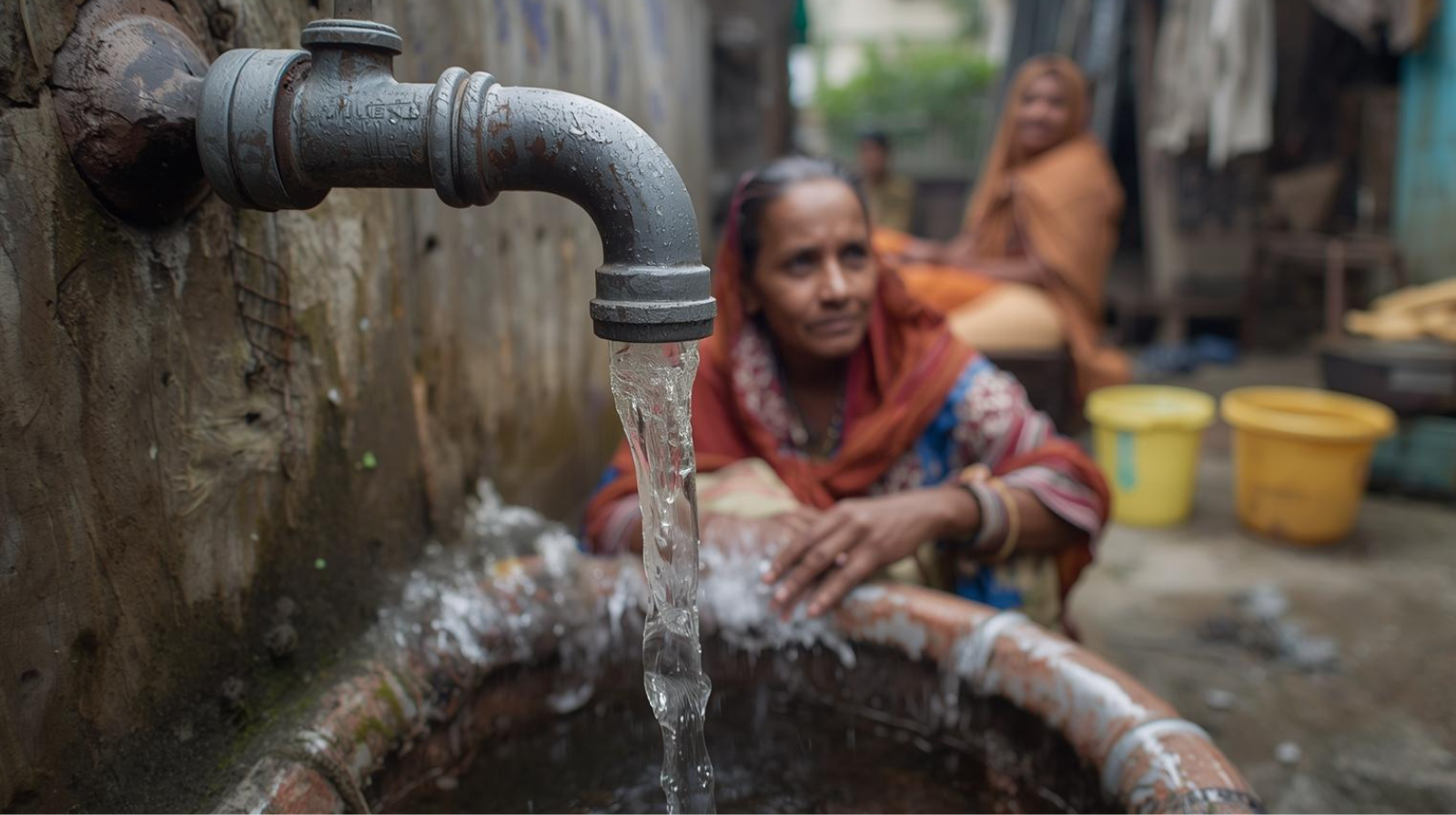
Evaluation of ‘Access to Piped Water at Home in the Slums of Chattogram’ Project (2022-2025)
Bonhishikha, in partnership with GRET, conducted an external evaluation of the Eau & Vie (E&V, now Better With Water) project ‘Access to Piped Water at Home in the Slums of Chattogram.’ Implemented between January 2022 and April 2025, and funded by AFD and private donors, the project aimed to improve living conditions in Chattogram’s urban slums. It focused on expanding access to safe piped water, promoting hygiene, strengthening fire prevention, and empowering communities through participatory approaches.
What we found:
The evaluation revealed significant progress in expanding access to clean water across three slums in Chattogram benefitting from new piped water connections, well above the project’s original targets. This access not only improved household hygiene but also strengthened trust in formal services, as families willingly invested in connection fees to secure reliable water supply. Alongside infrastructure, the project created meaningful community impact.
Despite these, the evaluation also highlighted challenges such as implementation delays caused by the COVID-19 pandemic, political unrest during 2024, and structural barriers linked to land tenure insecurity and authorisation processes with Chattogram Water and Sewerage Authority (CWASA). Nevertheless, the innovative dual structure, where ‘Shobar Jonno Pani (SJP)’ managed service delivery, and Water & Life Bangladesh led community mobilisation, proved highly effective in overcoming obstacles and ensuring participation from marginalised residents.
Ultimately, the findings underscored that the SJP model is a sustainable and scalable solution for inclusive urban water supply. To maximise long-term impact, however, greater institutional integration and sustained advocacy with government stakeholders will be essential in embedding this approach into national urban development strategies. -
Securing Women’s Resource Rights through Gender Transformative Approaches, 2023
The Global Initiative for Gender Transformative Approaches aims to enhance women’s land rights by integrating gender transformative strategies into IFAD’s rural development interventions. This initiative focused on sharing insights to improve policies, tools, and practices in Bangladesh and other programme countries.
In Bangladesh, Bonhishikha served as the local consultant with CIFOR-ICRAF, leading and coordinating a study for the Char Development and Settlement Project (CDSP). The Gender Analysis included a socio-legal review of current processes and a qualitative assessment of community members in the Noakhali programme areas. A major focus of the analysis was to address the intergenerational impact of equal land titling of khas lands and understand how this affects women’s land and resource rights in the char areas and the surrounding enabling environment. Bonhishikha also developed a toolkit on using the Gender Transformative Approach, co-created with the project team to incorporate a more feminist perspective into their programme design.
What we found:
The gender analysis in Bangladesh revealed that while dual-titling alone was insufficient to change social attitudes regarding women’s land control and access, additional training embedded in long-term, intersectoral efforts within a geographic area contributed to shifts in these attitudes. Across six countries, the initiative highlighted the necessity of localised and focused gender analysis to collaboratively develop gender-transformative approaches. -
Dalit Women and Girls: Gender Based Violence and Vulnerability
Bonhishikha, in partnership with Nagorik Uddyog, conducted an action research study exploring the nature, causes, and impacts of gender-based violence (GBV) among Dalit women and girls in Dhaka’s Doyagonj, Lalbagh, and Narayanganj communities. The study aimed to identify sociocultural and structural factors that reinforce caste-based and gendered inequalities, while creating pathways for empowerment and participation of Dalit women and girls facing multiple forms of oppression.
What We Found:
The research revealed that Dalit women and girls experience layered vulnerabilities due to poverty, caste discrimination, and restrictive gender norms. They face verbal, physical, and domestic abuse often justified by patriarchal notions of obedience, marriageability, and family honor. Their education, mobility, and decision-making are heavily controlled by male relatives, while structural exclusion limits access to justice and protection. These findings underline the urgent need for intersectional interventions that address gender, caste, and class to advance equality and reduce violence. -
Gender-Transformative Education: A Background Research Paper
Bonhishikha conducted an exploratory study for the Malala Fund to unpack the concept and practice of Gender-Transformative Education (GTE). The research aimed to inform the Fund’s strategic position by analysing global definitions, frameworks, and examples of GTE in advocacy, programming, and policy. It examined how education systems can become truly equitable by addressing structural gender inequalities across pedagogy, school environments, and institutional cultures.
What We Found:
The study revealed that GTE goes beyond access to education — it challenges patriarchal and social norms embedded within curricula, policies, and practices. It integrates intersectionality by recognising the diverse realities of students based on gender, class, caste, ethnicity, disability, and sexuality. Effective GTE requires a holistic approach that transforms educational spaces into sites of equality, agency, and collective empowerment, shaping a broader feminist vision of “quality education.” -
Market Assessment for Sustainable Alternative Livelihoods of the Sex Workers
A post Covid 19 baseline study, conducted by Bonhishikha in partnership with Save The Children Bangladesh reveals that a significant portion of mothers who work in the sexual industry intended to plan to do secondary livelihood activities aside from sexual services but a variety of difficulties were found when trying to start these activities. In this circumstance, a need for a rigorous market assessment had arisen to investigate sustainable alternative livelihood opportunities for the sex workers in the targeted brothel communities of Faridpur and Rajbari Districts.
What we found:
The market assessment for sustainable alternative livelihoods of sex workers in Bangladesh highlights the urgent need for economic diversification due to declining incomes, exacerbated by COVID-19 and structural changes such as the opening of the Padma Bridge. The study identifies key constraints, including limited financial access, lack of savings, minimal formal education, and internalised stigma. Preferred alternative livelihoods include tailoring, catering, health services, childcare, and beauty services, yet challenges such as high investment requirements and space limitations persist. Government and NGO training programmes exist but require improved financial inclusion, mental health support, and market linkages. A phased ‘graduation approach’ is recommended to assist sex workers in transitioning into sustainable, independent livelihoods. -
Gender Gap Assessment GAP Analysis Research and Developing a GAP Strategy for S2S-GG7 Project
Bonhishikha performed a Gender Gap (GAP) analysis for S2S-GG7 project, to assess barriers affecting girls and boys in developing growth mindsets and facing social exclusion. The GAP analysis not only identified and analysed the barriers, but also helped to break down barriers regarding project participation, improve gender and social equality, and create an enabling environment that supports the empowerment of individuals and groups who experience systematic oppression resulting in lower social power remains dismal. Our analysis identified entrenched stereotypes in school curricula and home life, which affect girls’ education and restrict their digital access. By highlighting areas of improvement within educational and community environments, we contributed to developing strategies for overcoming systemic discrimination, demonstrating our skill in creating research-informed solutions for gender equity.
What we found:
The GAP analysis identified that gender inequality and social exclusion are perpetuated in schools through curricula that reinforce stereotypes and poor infrastructure that limits access for girls and children with disabilities. Early and child marriage remains prevalent in low and middle-income households due to social pressure, despite awareness of its negative impacts. At home, girls experience greater burdens of household chores and receive less educational investment compared to boys. In schools, teachers often encourage traditional gender roles and punish non-conforming behaviours, reinforcing gendered expectations. Additionally, there are significant disparities in educational expectations, with boys encouraged to pursue STEM fields, while girls face a digital divide and restricted access to digital products and services. -
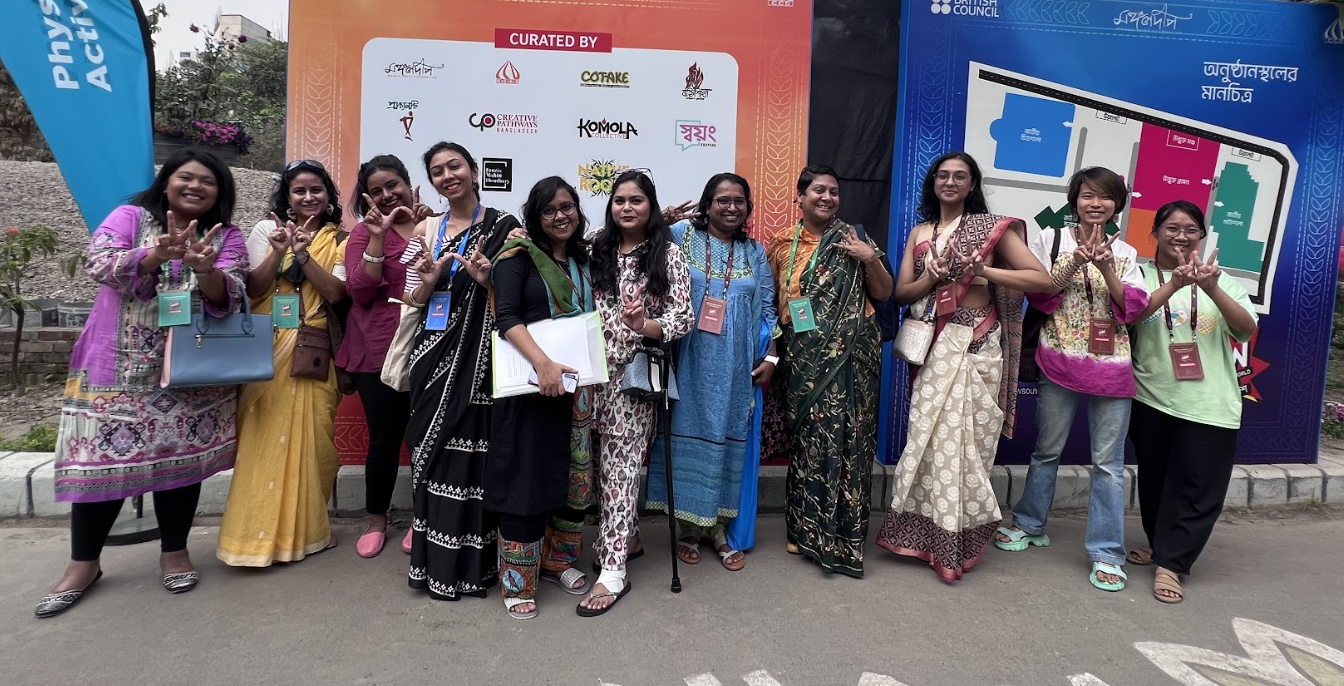
WOW Chittagong Chapter 2017
The event was organised in partnership with SPaRC in December 2017. Two Think-In sessions and the day-long WOW Festival in Chittagong, including panel discussions,marketplace, musical performance, etc were designed, organised and implemented by Bonhishikha and SPaRC.
-
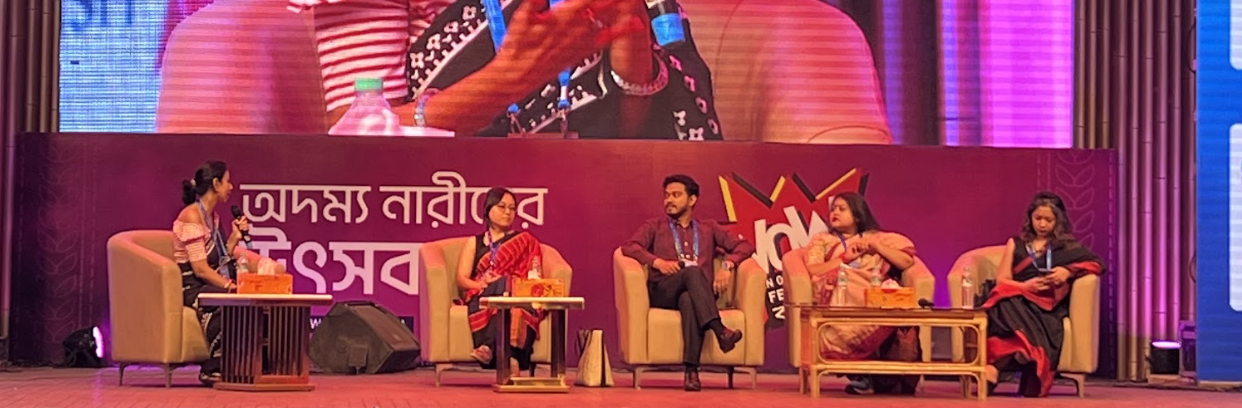
WOW Dhaka 2019
Bonhishikha, in partnership with SPaRC, worked with the British Council as local curator for the WoW Festivals in Dhaka, Bangladesh in 2019. Bonhishikha planned and organised workshops, bites participants, and panel discussions through the two-day event.
-
The Contribution of Visual Art to Social Inclusion and Creating a Discrimination-Free Society for the SOGI Community in South Asia (Reincarnate III)
Bonhishikha conducted a panel discussion titled, ‘The Contribution of Visual Art to Social Inclusion and Creating a Discrimination-Free Society for the SOGI Community in South Asia’, in Reincarnate III on Thursday 19th Jan, 2023 in order to discuss social inclusion and creating a discrimination free-society, and how art and cinema has a huge role to play in attributing to this. Representatives from the American Embassy and British High Commission were in the audience, along with media, special guests, and the public. The panel emphasized the need for coordinated regional activities and cooperative endeavors to ensure dignified lifestyles for SOGI communities while respecting social fairness and justice. In the discussion it was also highlighted how collective advocacy efforts to promote the inclusivity and equity of SOGI groups in policy and practice are a priority in order to ensure artists receive fair and equitable representation at the national and regional levels.