
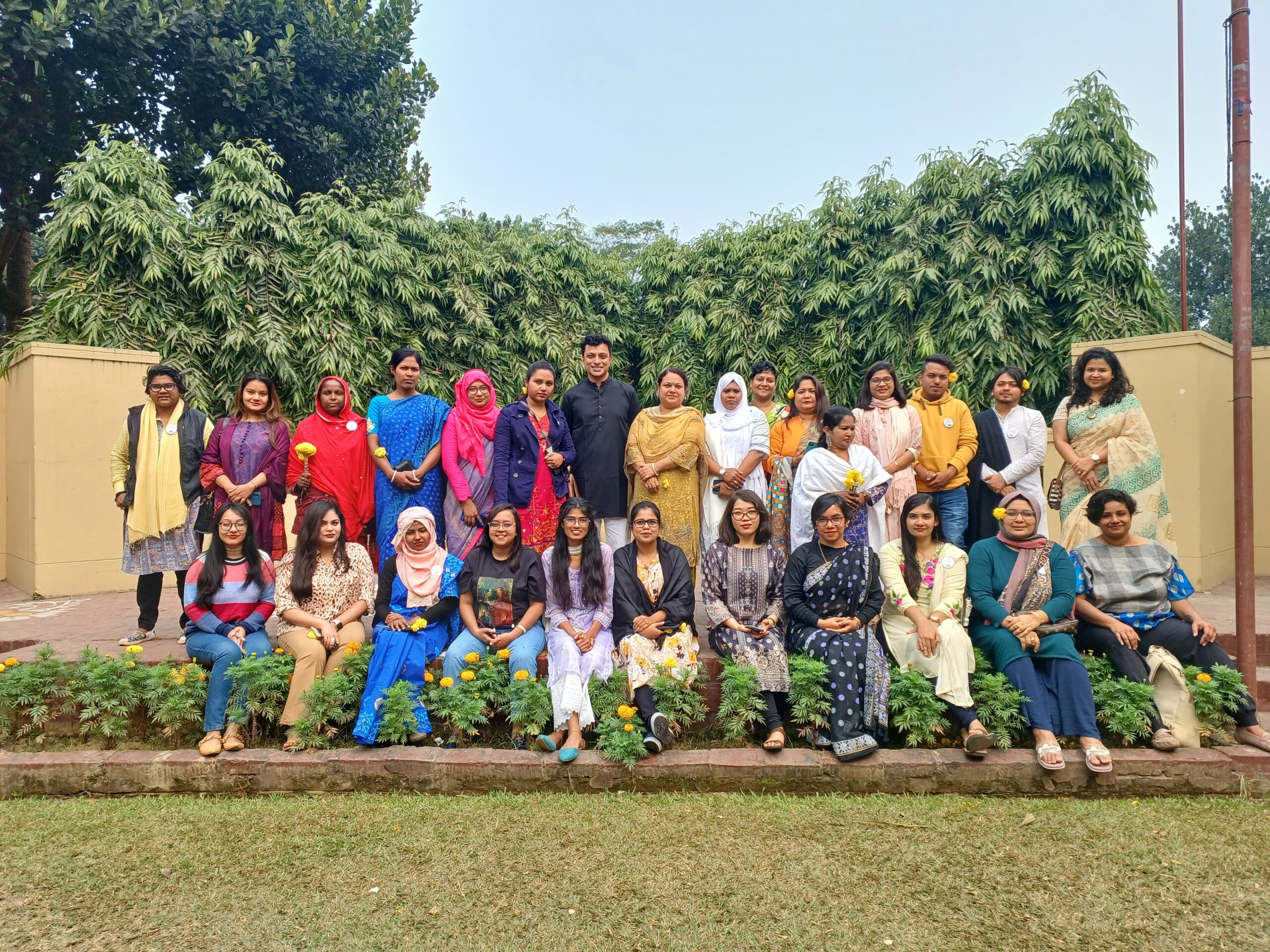
In December 2024, the Green Voices project was launched with support from the Embassy of the Kingdom of the Netherlands in Bangladesh and is currently being implemented by a consortium including The Asia Foundation in Bangladesh, The Earth, and Bonhishikha. The project aims to address the underrepresentation of women and youth in climate action and decision-making processes, especially in climate-vulnerable areas of Bangladesh. Spanning across 2025 and 2026, the project focusses on capacity development, convenings, story collection and dissemination, policy analysis, innovation challenges, and support youth and women-led organisations working at grassroots levels to create sustainable programmes, supported by comprehensive data and diverse funding sources. We are leading capacity development initiatives with grassroots-based CSOs and WROs to improve locally-led adaptation practices, and ensure solutions are led by grassroots partners.
Theme: Intersectional lens in climate change
-
Green Voices
-
SheRAA: Women’s Climate Resilience and Adaptation Alliance
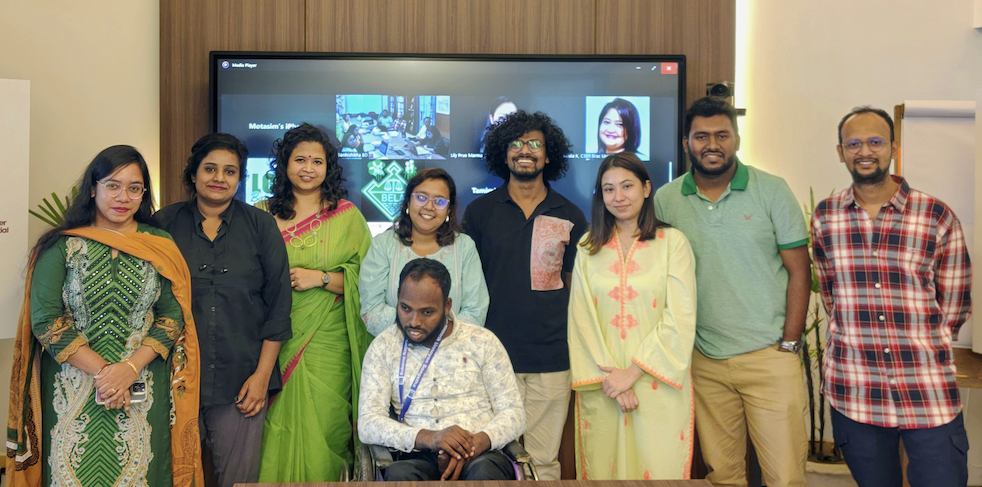
In 2023, The Asia Foundation in Bangladesh and Bonhishikha launched SheRAA – Women’s Climate Resilience and Adaptation Alliance. This coalition aims to enhance collaborative action between different stakeholders involved in the ideation, implementation, and communication of comprehensive solutions in the context of climate vulnerable communities. Bonhishikha is the current Secretariat and members of both the Advisory and Steering Committees for SheRAA. With a focus on inclusive and intersectional approach, Bonhishikha has been building mechanisms within the coalition to to engage grassroots organisations in more national and regional level initiatives.
-
Accelerating Innovation for Resilience (AI4Resilience) Challenge
From 2022 to 2023, Bonhishikha participated in the Global Knowledge Initiative’s AI4Resilience Challenge, where it proposed Feminist Action for Climate Change (FACC) as a platform to engage in collective action, addressing both existing and emerging climate interventions.
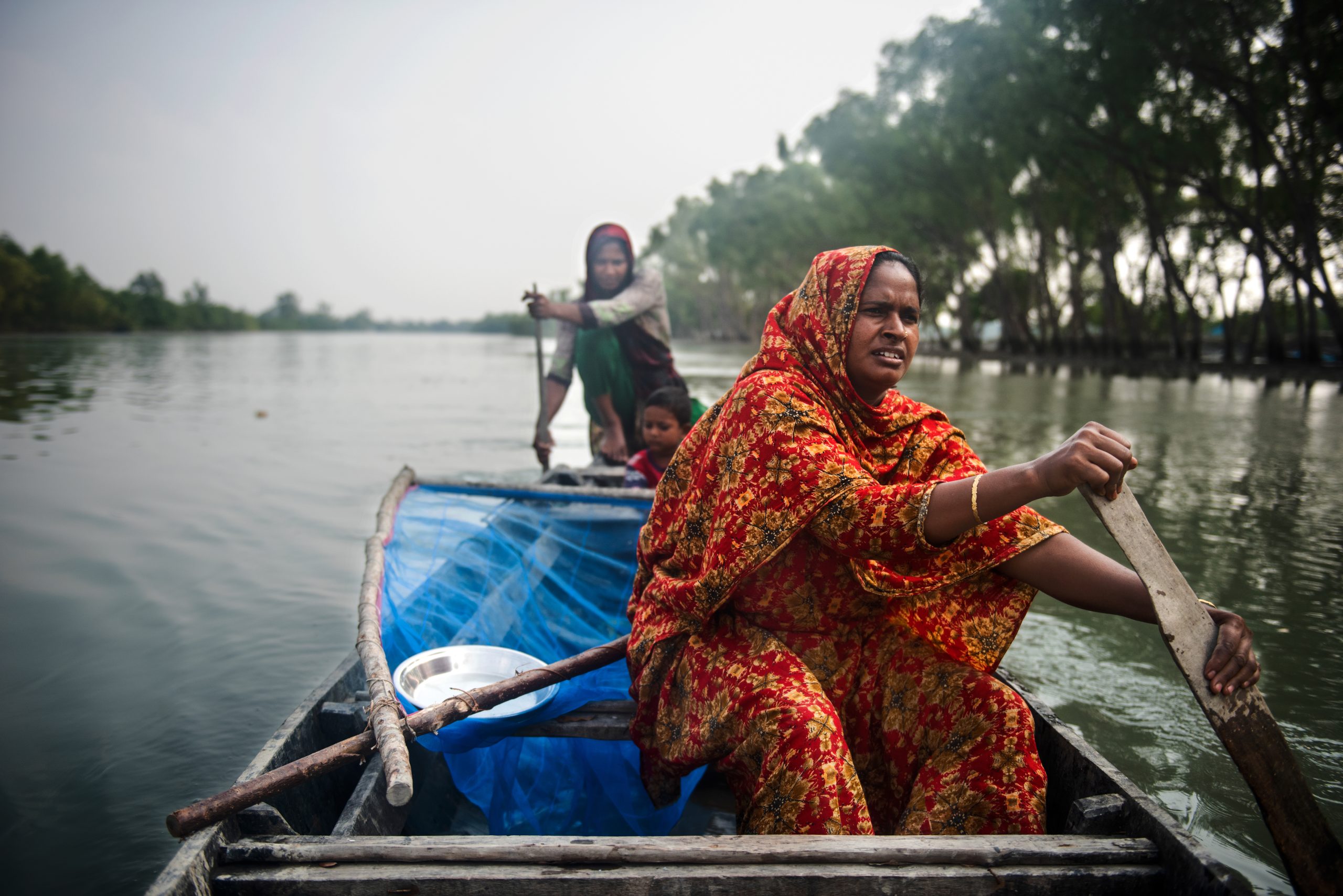
To support FACC, Bonhishikha collected data and stories in Shyamnagar, Satkhira, using them for awareness-building and advocacy through print and engagement. The findings revealed that rising salinity and sea levels have rendered land unusable, forcing women to engage in unsafe shrimp fishing. Water scarcity has added to their daily burdens, while exposure to saltwater causes severe health complications, especially for young women. Many women face heightened social vulnerability, with some being abandoned by their husbands. Gender-diverse individuals struggle to secure livelihoods, shelter, safety, and healthcare, challenges that are further worsened by natural disasters and social ostracisation.
-
Gender and Climate Interventions: Ensuring Women-led Solutions
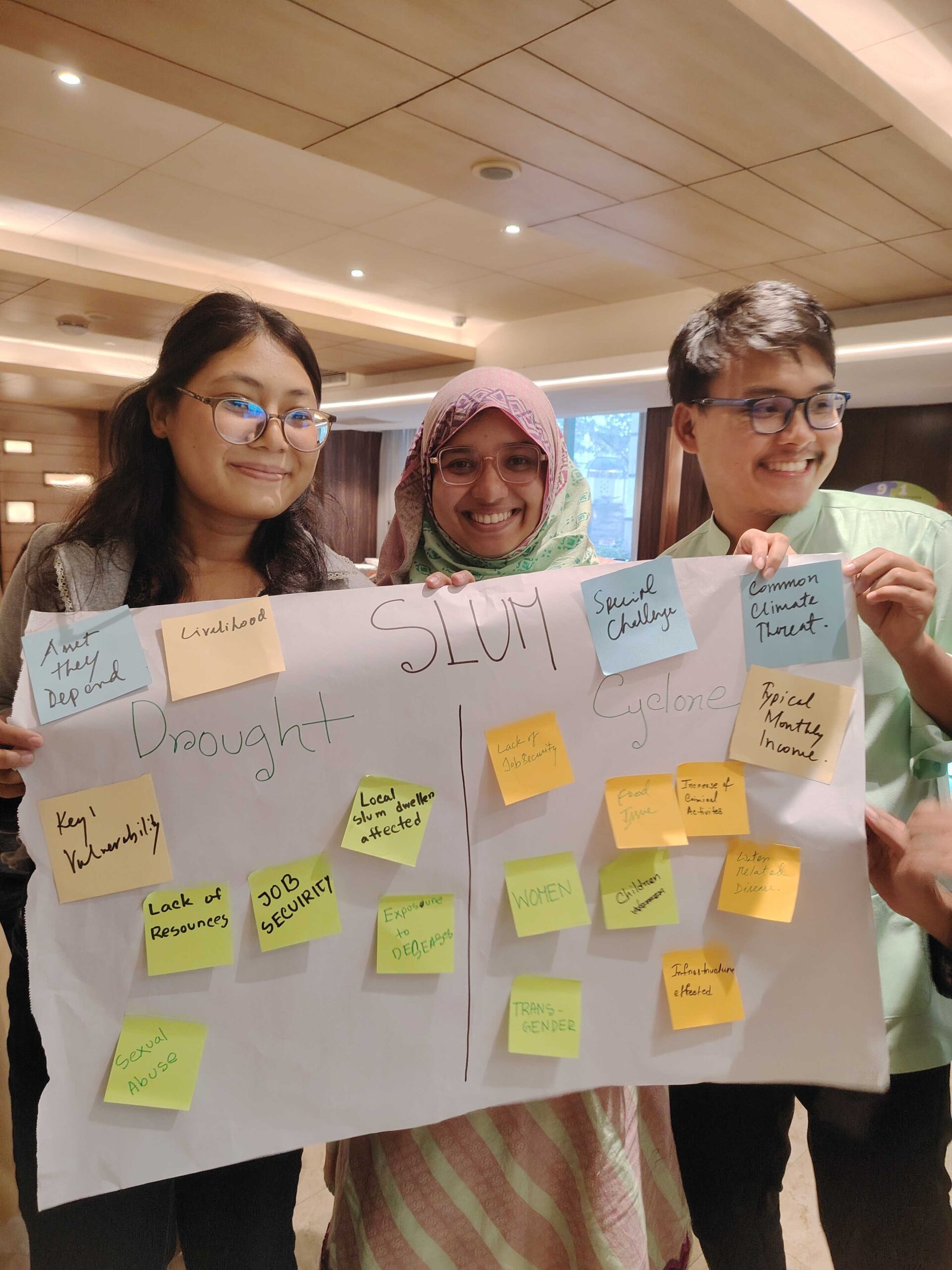
Bonhishikha hosted a round-table discussion at the EMK Centre on January 25, 2024, focusing on gender and climate interventions, with an emphasis on women-led solutions. The discussion addressed climate change, gender disparities, and their impact on women’s sexual and reproductive health and rights (SRHR). Key stakeholders from the UN, INGOs, national NGOs, and community-based youth organisations participated in the conversation. This event was part of the project ‘Capturing Community-Led Climate Solutions from the Sylhet Region’, funded by the IVLP Impact Award 2023. The project also featured a week-long exhibition showcasing photographs of women as frontline activists in the climate crisis in Sylhet and Satkhira.
The round-table discussion highlighted the disproportionate impact of climate change on women in Bangladesh, particularly on their livelihoods and sexual reproductive health and rights (SRHR), emphasising the need for women-led, community-centered solutions. Stakeholders, including UN, NGO, and INGO representatives, explored bottom-up approaches to address gender disparities and integrate women’s voices in climate interventions. The accompanying photo exhibition showcased the resilience of women in climate-affected regions like Sylhet and Satkhira, underscoring the importance of visual storytelling in advocating for gender equality and climate justice.